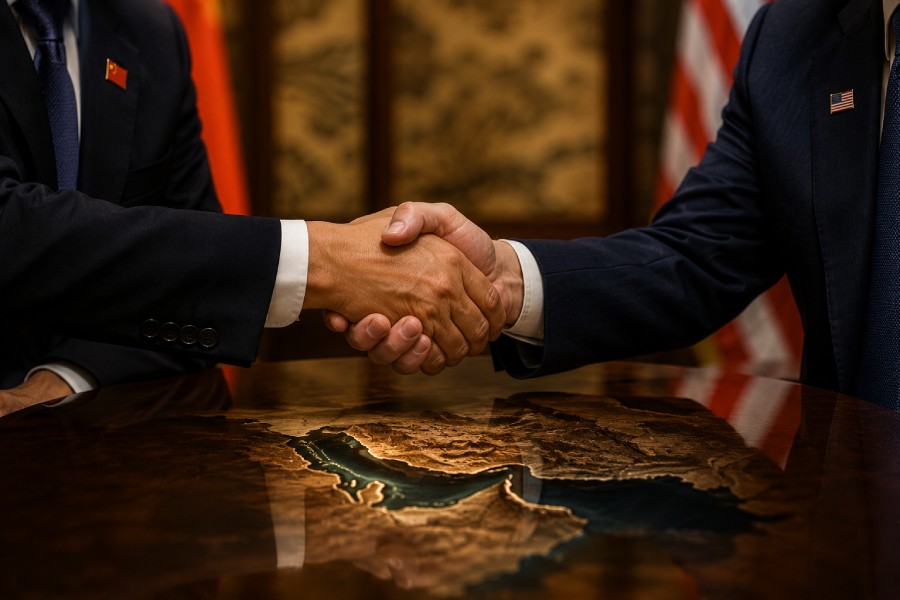
Buried in a joint readout from the Trump-Xi summit that concluded Friday afternoon in Beijing is one sentence that the gold market has not yet fully priced in. Given how fast markets have been moving on negative news this week, the positive sentence deserves its own analysis.
The White House statement from the summit read: “The two sides agreed that the Strait of Hormuz must remain open to support the free flow of energy. President Xi also made clear China’s opposition to the militarisation of the Strait and any effort to charge a toll for its use.”
This is not a peace deal. It is not a ceasefire extension. But it is something that has not existed before: a joint American-Chinese statement that Hormuz must be open. China has just publicly aligned itself with the US position on the most fundamental point of the conflict. The implications are significant.
China is Iran’s most important economic partner. It purchases approximately 90% of Iran’s exported oil. It generates billions of dollars annually for the Iranian government — money that has been sustaining the regime through the war. When Beijing publicly commits that Hormuz must stay open and opposes its militarisation, it is sending Tehran a message that China will not be complicit in Iran’s Hormuz strategy indefinitely. Chinese vessels have reportedly already begun passing through the Strait under new Iranian management protocols — the first regular Chinese transits since the conflict began.
Additionally, Xi told Trump that China would not provide military equipment to Iran. US National Security Advisor Mike Waltz called it “a huge outcome of this summit” and said “to see the Chinese backing away from Iran after meeting with President Trump was extraordinary.” Xi also expressed interest in purchasing more American oil to reduce China’s dependence on Gulf supplies — a statement that, if acted upon, directly reduces China’s leverage over Tehran and Iran’s leverage over the Strait.
For gold, this Beijing development is the long-term positive that the short-term inflation data this week obscured. If China’s new position gradually translates into diplomatic pressure on Iran — and there is now more reason than at any point since February to believe it will — the Hormuz reopening scenario becomes more probable. That scenario drops oil, eases inflation, revives rate cut hopes, and sends gold back toward $4,850 and higher. The jewellery market that has been buying patiently through the dip has been right to do so.