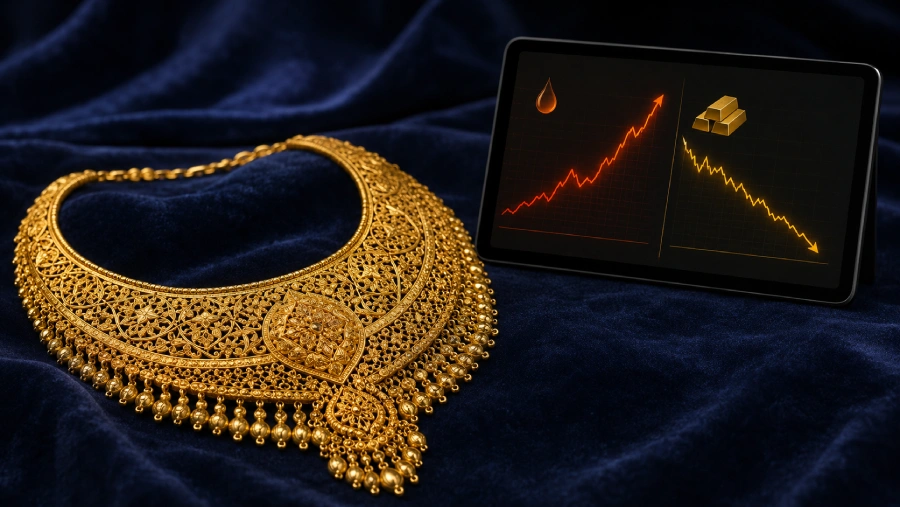
This Monday July 20, the US-Iran war entered its tenth straight day of escalation — and gold fell below $4,000 per ounce. For anyone who grew up believing that gold rises in times of war, this is deeply confusing. Yet it is the single most important thing to understand about the gold market in 2026. Here is a clear explanation of why, this year, war is pushing gold down instead of up.
For centuries, the rule held: when war and crisis strike, investors flee to the safety of gold, and its price rises. That rule assumes the war creates fear and uncertainty without directly changing the economics of money itself. But the 2026 US-Iran war broke that assumption, because of one specific detail — it centers on the Strait of Hormuz, the narrow waterway through which about a fifth of the world’s oil passes.
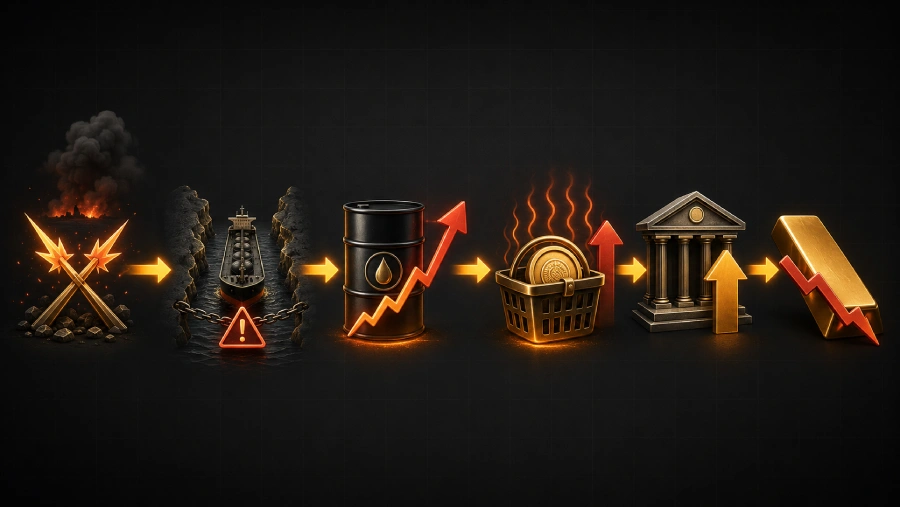
Here is the chain of cause and effect. When the war escalates — as it did this weekend, with fresh US airstrikes after three American soldiers were killed, and Iran intercepting four vessels in the strait — the flow of oil is threatened. Oil prices surge; they have now jumped about 30% from their July lows, with Brent above $90 a barrel. Higher oil prices push up the cost of nearly everything, because energy flows through the entire economy — transport, manufacturing, food. This is inflation. And when inflation rises, the US Federal Reserve must respond by keeping interest rates high, or raising them, to bring prices back under control.
This is where gold suffers. Gold pays no interest — it earns nothing simply by being held. When interest rates rise, savings accounts and government bonds become more attractive by comparison, and money flows out of gold and into those yield-bearing assets. So the war, by driving up oil and therefore inflation and therefore interest rate expectations, ends up pushing gold down. This weekend’s escalation drove the probability of a September rate hike up to about 53%, and gold slipped below $4,000 in response.
There is a striking implication that every gold buyer should understand: in 2026, gold needs the war to end, not escalate, in order to rise. A genuine ceasefire would send oil prices down, ease inflation, allow the Fed to stop tightening, and unleash gold’s recovery. The resolution of the war is the bullish catalyst — not the conflict itself.
For Gulf jewellery buyers, the practical takeaway is clear. Gold below $4,000 is roughly 28% below January’s record of $5,597 — among the deepest discounts of the year — yet still up around 18% over the past twelve months. The forces pushing it down are cyclical and tied to the war and the Fed, both of which will eventually change. Meanwhile, the structural demand endures: China’s central bank has been buying at its fastest pace in over two and a half years. Understanding the paradox turns today’s confusing price into a clear opportunity for the patient buyer.