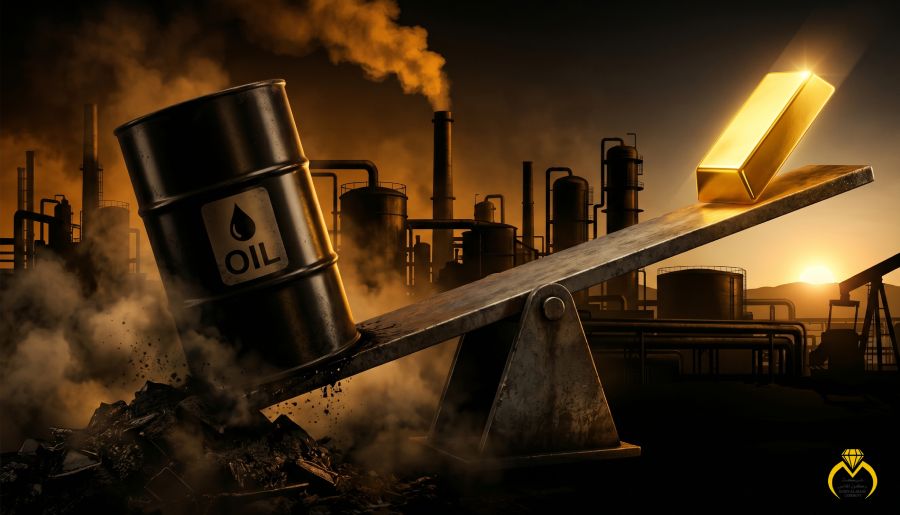
Gold closed Friday April 25 headed for a weekly loss of approximately 3%, its worst weekly performance since the Iran war erupted in late February. The week that ends today saw gold slide from near $4,755 on Monday to below $4,700 on Thursday and Friday, with the precious metal now sitting roughly 16% below its all-time high of $5,595 struck in January. The cause is not a lack of geopolitical danger — there is more of that than ever. The cause is oil.
Here is the mechanism that most buyers don’t see clearly: when Iran’s Revolutionary Guard mines the Strait of Hormuz and the US Navy responds by seizing tankers and ordering lethal force against mining boats, oil prices surge. With the strait effectively closed — only single-digit numbers of ships transiting per day compared to over 100 in peacetime — the global energy supply shock is enormous. The IEA called it “the biggest energy security threat in history” on Thursday. High oil means high inflation. High inflation means the Federal Reserve cannot cut interest rates. When rate cuts are off the table, the dollar strengthens and gold, which pays no interest, faces selling pressure.
Gold’s relationship with war has always been complex. It is a safe haven — but only when the danger doesn’t simultaneously fuel inflation and rate expectations. Right now, the Hormuz crisis is producing exactly the wrong kind of war effect for gold in the short term.
The longer picture remains compelling. Gold is still up over 25% since early 2025. The FOMC meets April 28–29 — if Powell opens the door to rate cuts later this year despite inflation, gold will recover fast. Goldman Sachs ($6,000 by end 2027) and J.P. Morgan ($5,055 by Q4 2026) have not changed their targets.