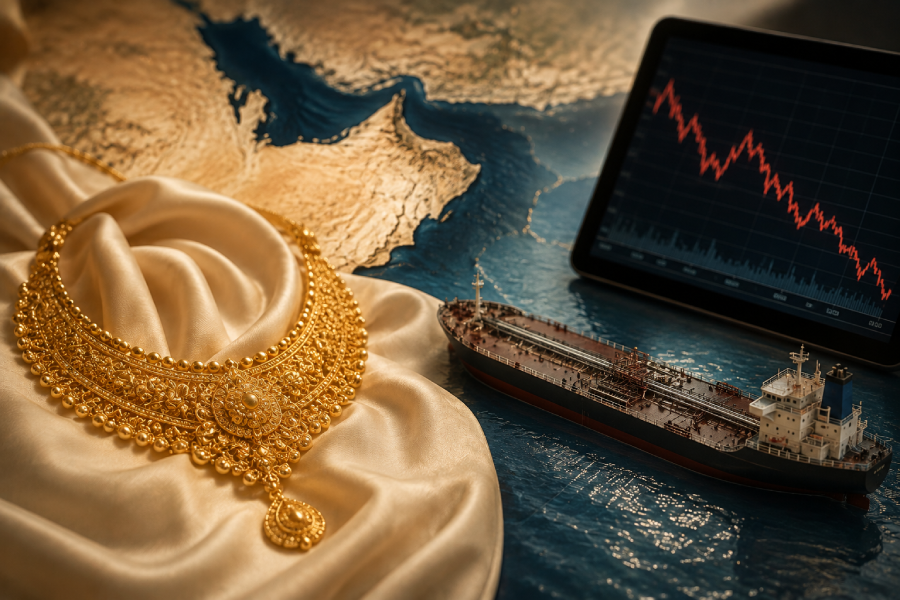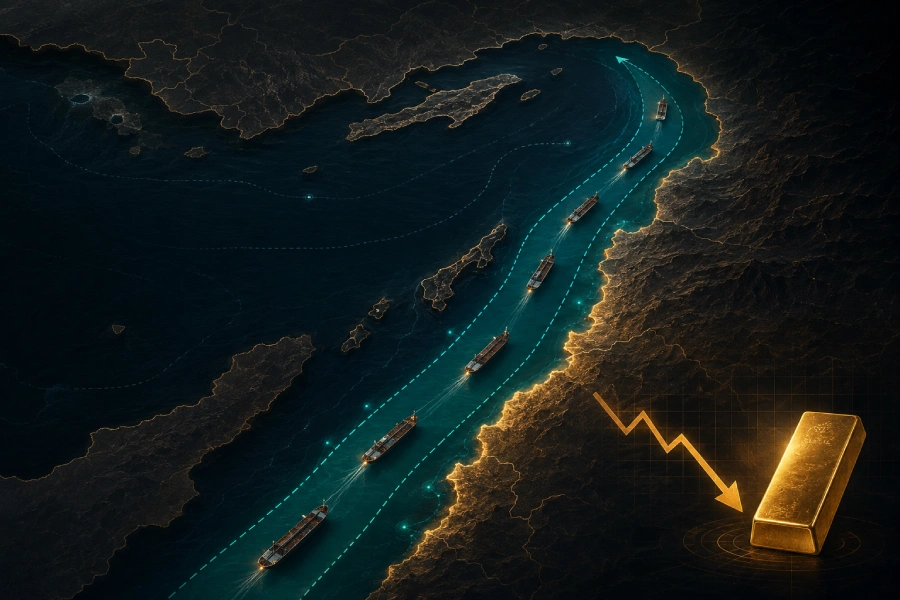
Amid the noise of this Monday August 3 — Trump announcing talks with Iran, Tehran denying them, strikes paused, claims and counterclaims — one quiet detail stands out as possibly the most important development of the entire month: ships have started moving through the Strait of Hormuz again, along a safe “temporary” route near the Omani coast, arranged between Iran and Oman. For gold buyers trying to see through the diplomatic fog, understanding why this corridor matters so much is essential. Here is a clear guide.
First, recall why Hormuz is the center of everything. The Strait of Hormuz is the narrow waterway through which roughly a fifth of the world’s oil passed before the war. When Iran effectively closed it during the conflict, oil prices surged, global inflation pressures intensified, and the US Federal Reserve was pushed toward higher interest rates — the chain that has suppressed gold all year, because gold pays no interest and suffers when rates rise. Before the war, around 100 commercial vessels transited the strait on a typical day; during the worst stretches, fewer than 10. That collapse in traffic is the physical root of the world’s inflation problem this year.
Now the development. Iran’s Foreign Ministry says it is working with Oman — not with the United States — to establish a safe, temporary route for vessels through the strait, running near the Omani coast. And according to shipping sources, some vessels have already begun using this lane. This matters for a simple reason: it is not a statement, a claim, or a negotiating position. It is oil physically moving. Whatever the two governments say about each other — and today Iran called Trump’s account of events a “new lie” while Trump insisted “there’s a deal” — the tangible reality of tankers transiting Hormuz is the thing that actually lowers oil prices, eases inflation, and ultimately frees the Federal Reserve to relax.
This is why experienced market watchers often say: watch what moves, not what is said. Diplomatic statements can reverse in an hour. But each tanker that safely transits the corridor rebuilds confidence, adds supply to the market, and chips away at the war-risk premium in oil prices. Oil fell today on exactly this logic. If the corridor holds and widens, the inflation pressure that has weighed on gold through the Fed channel would steadily lift.
For gold, the effect is nuanced, as today’s mixed trading shows. Lower oil and easing inflation are ultimately positive for gold, because they reduce the pressure for Fed rate hikes — markets still price roughly a 63% chance of a September hike, and anything that lowers those odds helps the metal. At the same time, de-escalation trims safe-haven demand, which explains why gold opened higher and then eased rather than surging. The path matters: a gradual, durable reopening of Hormuz that cools inflation without a shock would be the friendliest possible scenario for gold.
For Gulf jewellery buyers, the takeaway is patient optimism. Gold near $4,070 is about 27% below January’s record and up roughly 20% over the past year, fresh off its first winning month in five. The structural support remains firm — central banks bought a net 41 tonnes in May, with 89% of reserve managers expecting official holdings to keep rising. Watch the corridor, and watch Friday’s US jobs report, which will shape the September rate decision. Between ships moving and jobs data landing, this week could tell us much about gold’s autumn.