For months, we have explained a strange truth about the 2026 gold market: the US-Iran war was pushing gold down, not up. This Monday July 27, that pattern finally reversed. The two sides paused their fighting over the weekend, oil prices crashed, and gold climbed above $4,100. For gold buyers, watching this chain of cause and effect run in reverse is one of the most illuminating moments of the entire year. Here is a simple explanation of what just happened and why it matters.
First, the news. After 13 days of intense strikes, the United States halted its attacks on Iran, and for a third straight night neither side launched new attacks. Iran said it would maintain a ceasefire as long as the US stays paused. Markets took this as an early sign of de-escalation, and the response was dramatic: oil prices tumbled sharply, with Brent crude falling from near $100 toward $92 a barrel, and stock markets rallied worldwide.
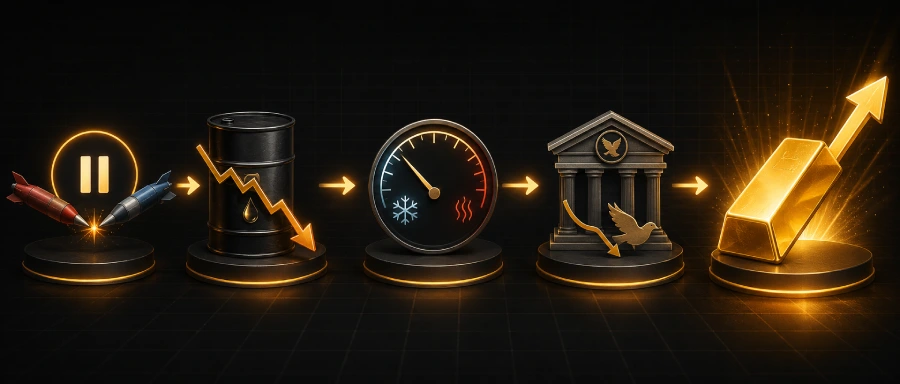
Now, the chain — and why gold rose. Throughout this war, we explained how escalation hurt gold through a specific sequence: war disrupts the Strait of Hormuz, oil prices rise, higher oil creates inflation, inflation forces the Federal Reserve to keep interest rates high, and high rates weigh on gold because gold pays no interest and competes with interest-bearing assets. Every step of that chain pushed gold down.
This weekend, the chain ran in reverse. The pause in fighting eased the threat to oil supply, so oil prices fell. Lower oil reduces inflation pressure. Reduced inflation relieves the Federal Reserve of the need to keep rates high. And a less hawkish rate outlook makes non-yielding gold more attractive. So the same chain that pushed gold down during escalation now lifts it during de-escalation. This is precisely why we have said all year that gold needs the war to end, not escalate, to rally — and this weekend offered the first real glimpse of that dynamic working in gold’s favour.
A note of caution is essential, though. This is described as a tactical pause, not a formal ceasefire. Houthi forces continued attacking Saudi oil facilities over the weekend, and the Strait of Hormuz remains effectively closed to normal shipping. The situation could re-escalate quickly. This is why gold did not soar dramatically but rose in a measured way — the market is hopeful but cautious.
For Gulf jewellery buyers, the takeaway is encouraging. Gold near $4,095 is about 27% below January’s record of $5,597 and up roughly 19% over the past year. It has held firmly above $4,000 since late June, with buyers stepping in whenever it approaches that level. The structural demand endures — central banks bought a net 41 tonnes in May, and a record 45% plan to buy more this year. The other key event this week is the Federal Reserve’s decision on Wednesday July 29, which will shape gold’s next move. But this weekend showed, for the first time, what a path toward peace could mean for gold.