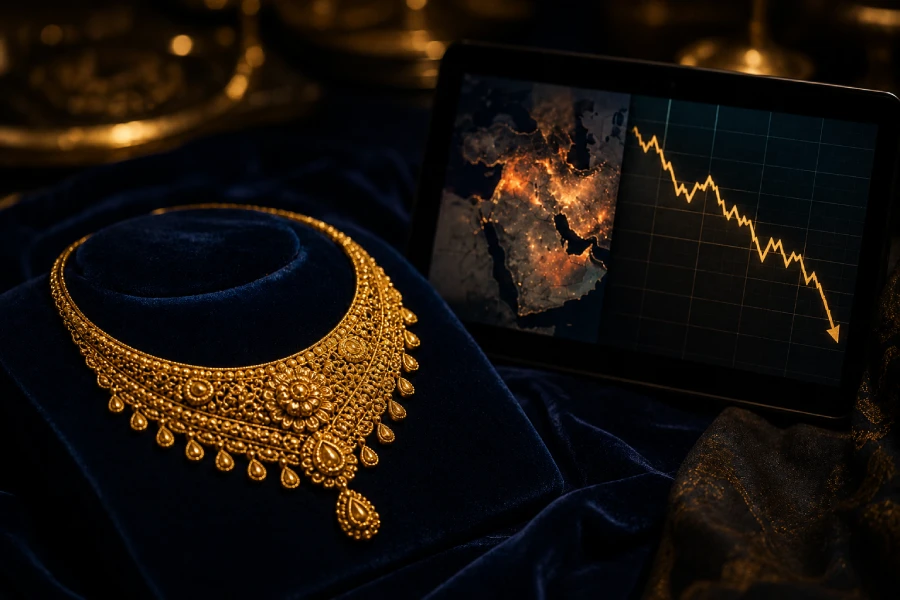
For generations, one rule held true in the gold market: when conflict erupts, gold rises. War, missiles, and geopolitical chaos sent investors rushing to the safe haven of gold. Yet this Monday June 29, with Iran having struck US bases in Kuwait and Bahrain over the weekend and the Gulf in its most dangerous escalation in weeks, gold is falling — trading near $4,015, down about 1.7% on the day. For every gold buyer, understanding why this old rule has broken is the single most important lesson of the 2026 market.
The escalation is real and serious. Iran’s Revolutionary Guard launched ballistic missiles and drones at the US Ali Al Salem airbase in Kuwait and the US Fifth Fleet in Bahrain, after the US struck five Iranian targets. Iran had earlier targeted a cargo ship and a Qatari oil vessel in the Strait of Hormuz. Trump warned Iran “will no longer exist” if strikes continue. In a normal market, this would send gold soaring. Instead, gold is heading for its fourth straight monthly loss, down about 10.5% in June.
Here is why the old rule broke. In 2026, gold is being driven not by fear, but by the Federal Reserve and interest rates. The reason is the unusual nature of this particular war. Because the conflict centred on the Strait of Hormuz — through which 20% of the world’s oil flowed before the war — it created an oil and inflation shock. That shock forced the Federal Reserve to keep interest rates high and signal further hikes. And high interest rates are gold’s greatest enemy, because gold pays no income; when bonds and cash yield more, investors prefer them over non-yielding gold. The result: even as missiles fly, the dominant force on gold is the Fed’s hawkish stance and the strong dollar it produces. Markets now price roughly three rate hikes this year.
There is a second twist that makes this even clearer. Normally, Gulf conflict sends oil prices soaring, which would at least support gold through the inflation channel. But this time, oil has fallen to its lowest since the war began — Brent around $72 — because the market believes Hormuz will reopen regardless.
Iran’s foreign minister said the strait will return to pre-war capacity within 30 days under Iranian management. Falling oil means falling inflation expectations, which removes even the indirect support gold might have received from the conflict.
For Gulf jewellery buyers, this paradox creates a genuine opportunity worth understanding. The forces pushing gold down — Fed hawkishness and a strong dollar — are monetary and cyclical. They will not last forever; interest rate cycles always turn. Meanwhile, the forces supporting gold’s long-term value are growing stronger: global bar-and-coin demand hit 474 tonnes in Q1 2026, the second-highest on record and up 42% year-over-year, and roughly 90% of central banks expect global gold reserves to rise over the next year. Gold near
$4,015 is down 10.5% this month but still up 21.6% over the past year. When the Fed cycle eventually turns, the safe-haven and structural demand that is being overwhelmed today will reassert itself.